Has the dining table become obsolete, or are we redesigning intimacy?
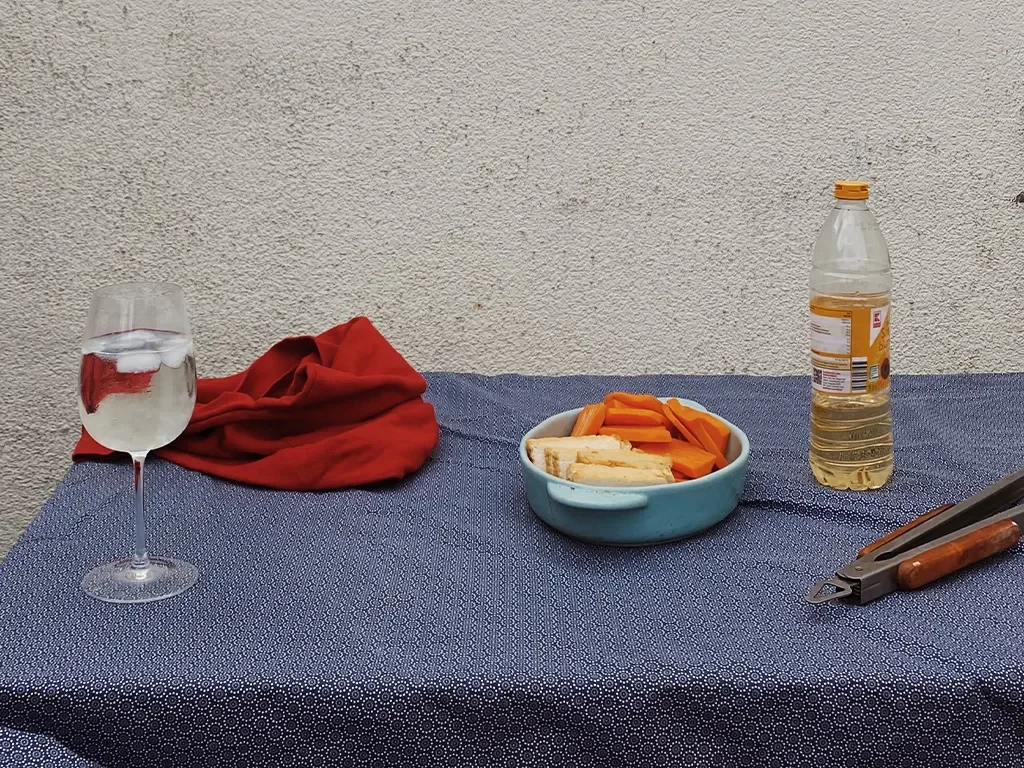
Maybe the challenge is not physical at all. Maybe it is cultural.
It’s a slab of wood with four legs. It’s usually accompanied with chairs. I live in a tiny studio apartment where I don’t necessarily need a dining table, yet I insist on having one. It has become the core of my daily activities. My dining table has endured countless brunches and dinners with friends. It has lived through wine, coffee, and tea stains - and through many identities and cultures shaped by the people I’ve gathered around it.
But has the dining table lost its importance in the home? As people get busier, live in smaller spaces, and as single households continue to rise, something as simple as eating - alone or together - has become more fragmented and solitary. Or perhaps it’s our constant need for distraction: eating in front of the TV or scrolling on our phones. Eating at a dining table has become a task to complete, rather a ritual to savor and nourish ourselves.
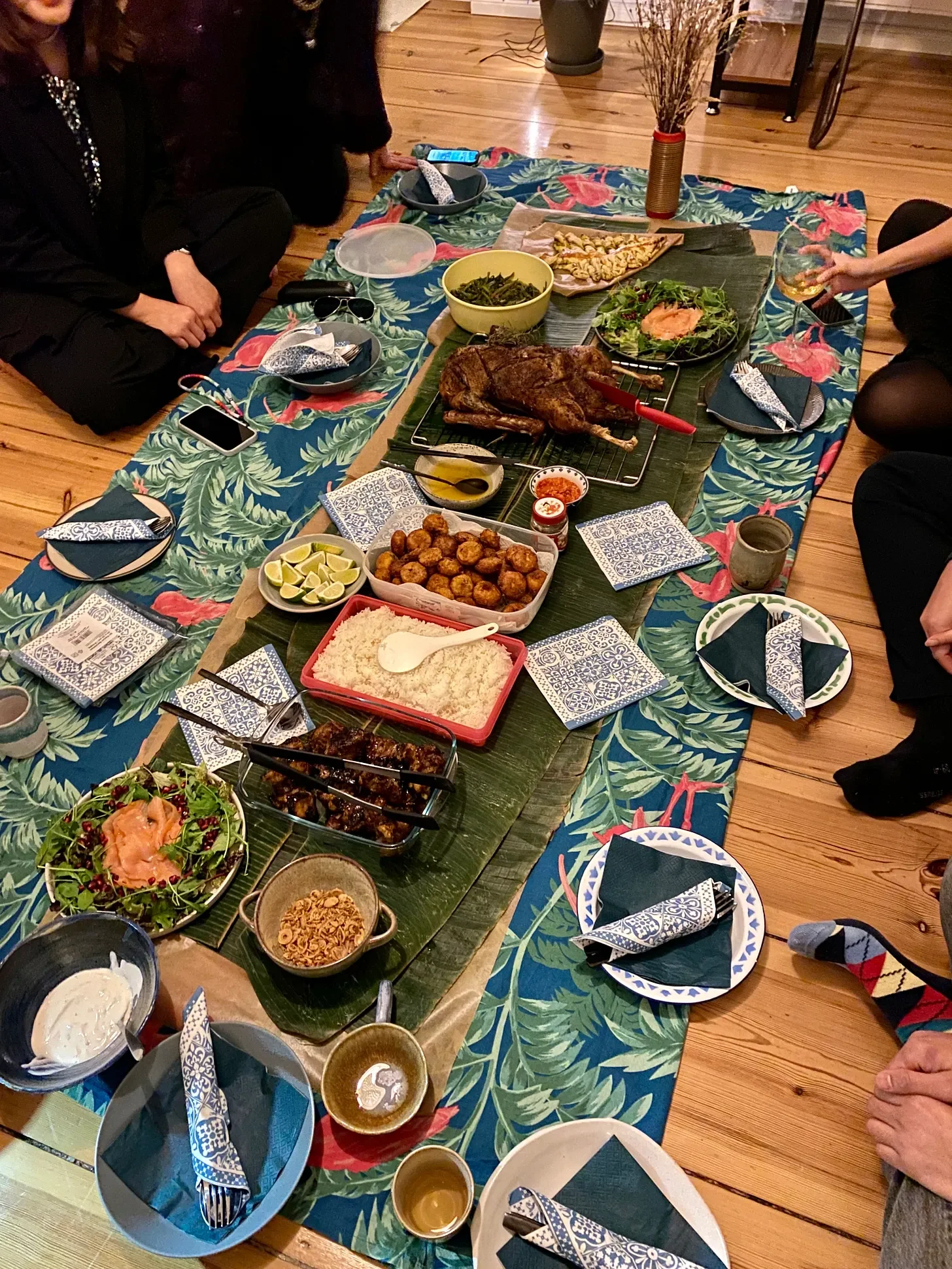
In Indonesia, meals have always been a communal experience.
As an Indonesian, eating at a dining table is not a given. More often, we sit on the floor, emphasizing collectivity, proximity, and egalitarianism rather than hierarchy. There is no head of the table, no physical barrier between people. Food is shared from the center. Without chairs, everyone occupies the same level, creating a quiet sense of equality and casualness. The absence of a table does not mean the absence of ritual. If anything, it can reinforce connection and openness.
Growing up in a Chinese-Indonesian household, however, we did have a dining table, a round one. What fascinates me about a round table is that no one sits at the “head.” The shape itself resists hierarchy. And with the rotating lazy Susan in the middle, everyone has equal access to the food. I love the choreography of it: the patiently waiting as dishes slowly arrive in front of you, the small gestures of helping one another turn the disc, the shared rhythm of reaching and passing. Something about it feels communal, almost democratic. Structured, yet intimate.
If the dining table once functioned as the heart of the home, today it has to justify its existence in square meters. Apartments are shrinking. Single households are increasing. Work bleeds into private life. A table is no longer just for dinner, it must perform. In my case, the role of the dining table dissolves into multifunctionality. And in that transformation, something subtle shifts. When a table is everything, is it still a place for ritual?
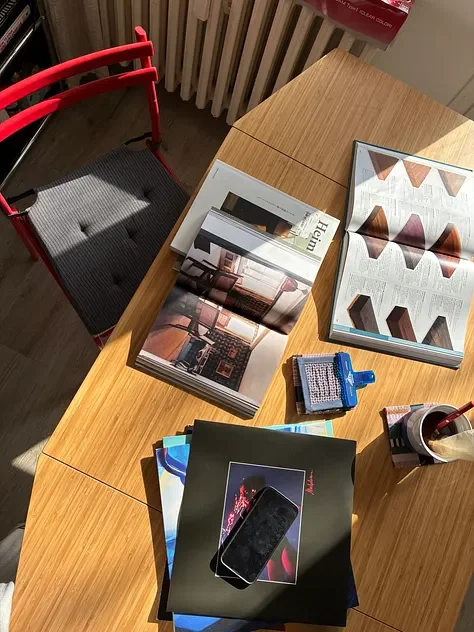
When a table is everything, is it still a place for ritual?
The design challenge of a table, then, is not about aesthetics or materials. It is about our intentions. How do we design a table for people who eat alone but still long for connection? How do we create furniture that accommodates flexibility without erasing ritual and culture?
Or maybe the challenge is not physical at all. Maybe it is cultural. A question of whether we are willing to sit across from one another without distraction. Because a table, at its core, is an invitation. To pause. To face someone. To share. Not just food, but time. And maybe what we are redesigning is not the dining table itself, but the distance we are comfortable holding between each other.
