Finding Love and Nightstands
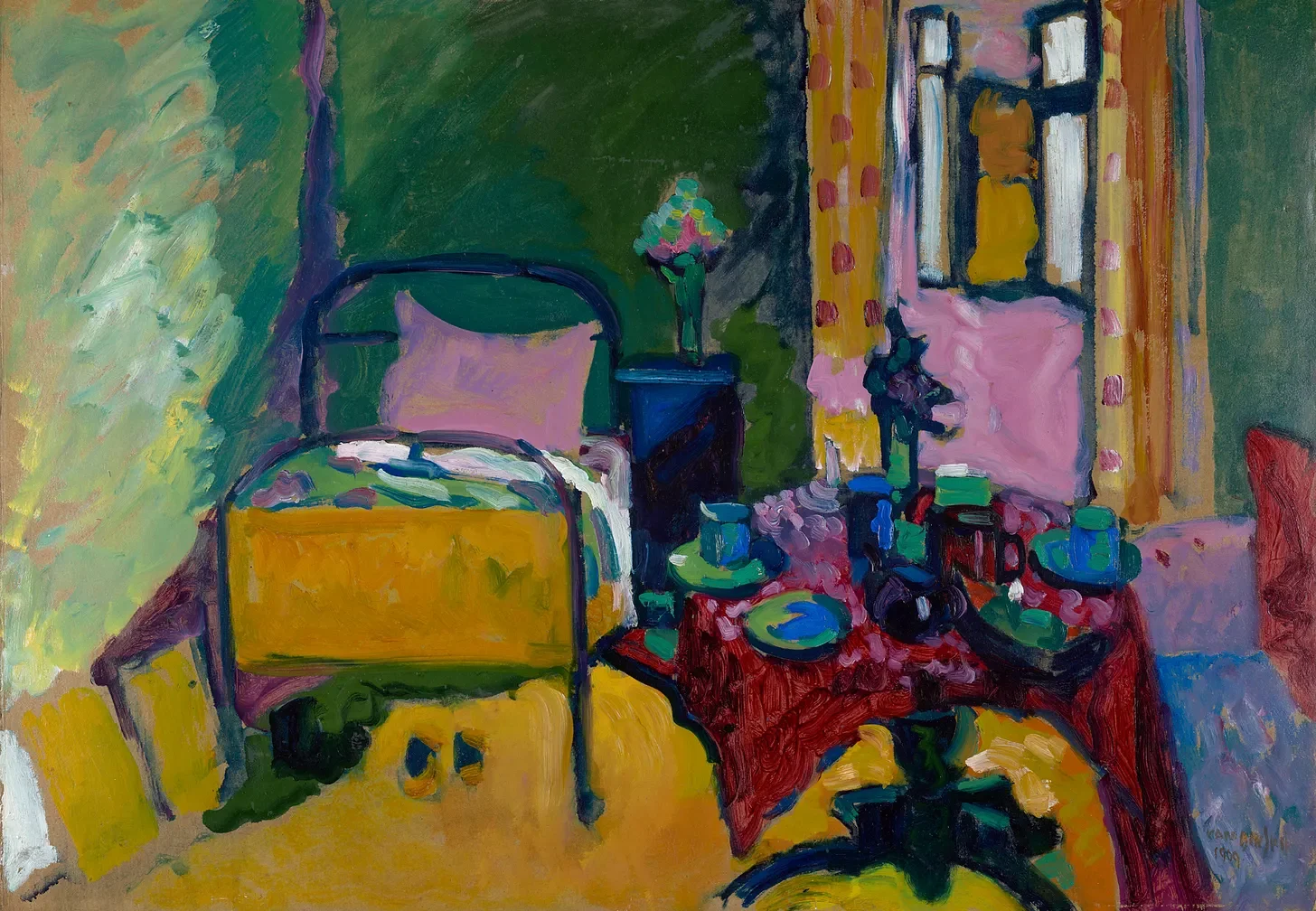
Wassily Kandinsky, Schlafzimmer, 1909, Öl auf Pappe, 48,5 cm x 69,5 cm, Städtische Galerie im Lenbachhaus und Kunstbau München, Gabriele Münter Stiftung 1957
Finding love has been so hard these days that we place so much pressure on nightstands.
Yes, nightstands. Those furniture pieces sandwiching a bed, not one-night stands - but increasingly loaded with expectation. The other day, I stumbled upon Talia Mayden’s Architectural Digest tour of her Brooklyn apartment. While I really love her interior style, what she said sticks in my mind, “I made sure to have two nightstands… I wanted to encourage the idea that one day I would have a partner who would sleep in my bed with me and use a second nightstand.”
Here I asked myself, what have nightstands got to do with finding love? Has finding love been so hard that we put so much pressure on objects, rather than reckoning how society and the current dating culture have changed the way we connect?
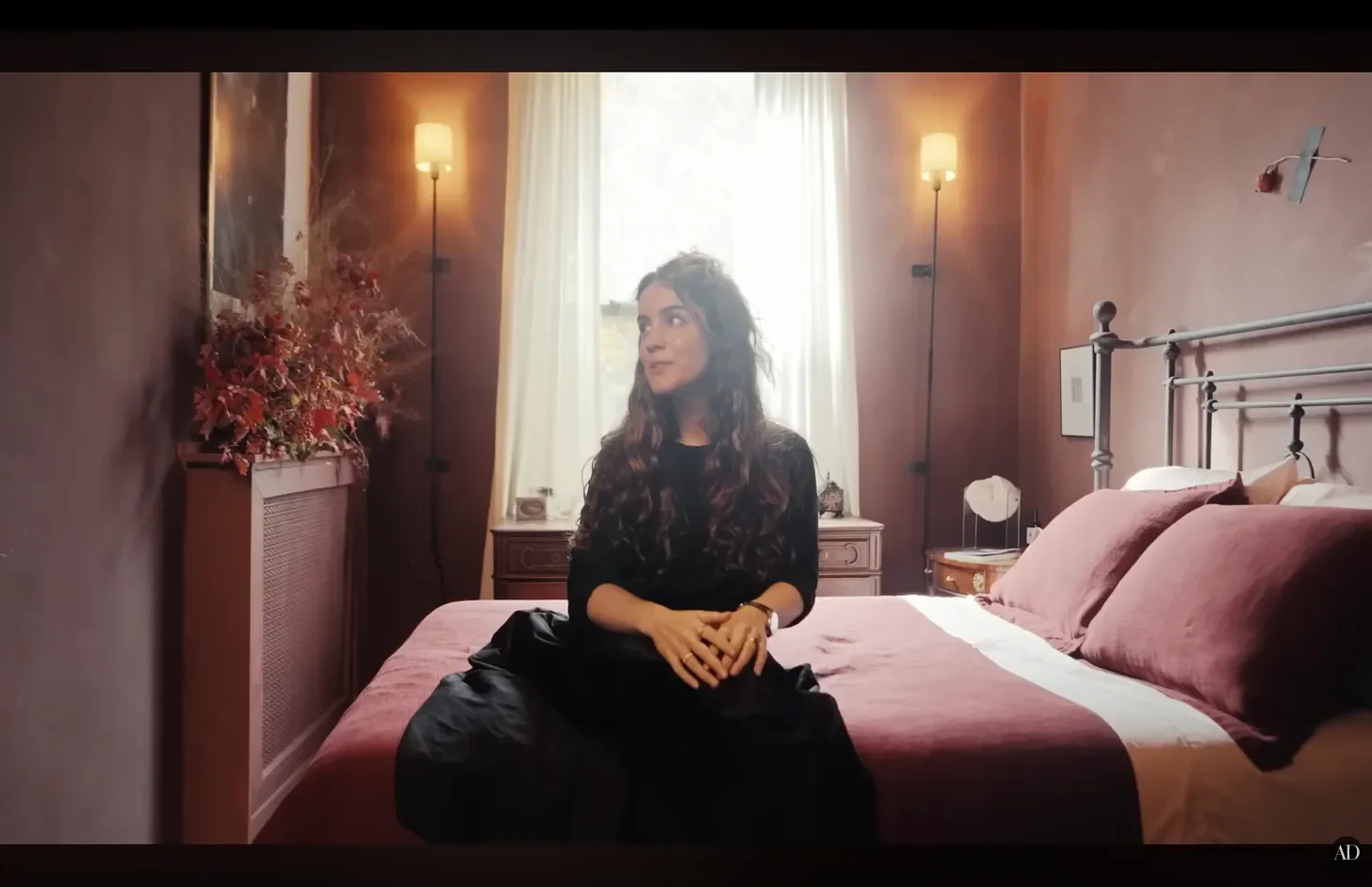
Talia Mayden in her Architectural Digest’s Brooklyn apartment tour
Don’t get me wrong. I’m not criticizing Mayden and others who are open to many ways of attracting partners through rearranging furniture. This is also not the first time I heard the idea of having two nightstands to attract a partner. I’ve heard many variations of it before: placing items that depict a couple, like two lovebirds, or using more pink or red tones in the space. In feng shui - or rather the simplified social media version of it - it often talks about balance and symmetry on nightstands, even though the original practice was about harmony in the bedroom. What was first a comfort practice has become a checklist for attracting a partner.
As humans, we naturally use objects as stand-ins for feelings, memories, identity, and comfort, as this is one of many ways our brains organize meanings. And here we’re talking about love - finding love, finding a romantic partner, THE ONE who we’ll spend the rest of our lives with - and we are emotionally attaching these feelings, hopes, and fantasies to the nightstands, the objects. On top of that, we’ve fed our fantasies further as we’ve heard beautiful stories like Mayden’s, who now has a partner and has shared that the two nightstands were her way of symbolically making room for one. The objects have now become symbolic extensions of our life story, not because the objects have power, but because our brains link them with important internal experiences. This is why we load nightstands with meaning - they’re tied to how we see ourselves and what we hope for.
Nightstands, as furniture objects, were never symbolic beyond their practical use. In many mid-century homes, bedside tables were practical and often chosen for proportion and flexibility. Designers like Charles and Ray Eames, George Nelson, and Florence Knoll often prioritized function over visual balance in their work. In fact, it wasn’t unusual for one side of the bed to hold a small table while the other side was left without. Bedrooms were designed around how people actually lived, and not how spaces were photographed. The expectations of perfectly matched nightstands came much later, with the boom of hotel interiors, furniture catalogs, and later, social media, where symmetry equals calm and completeness.
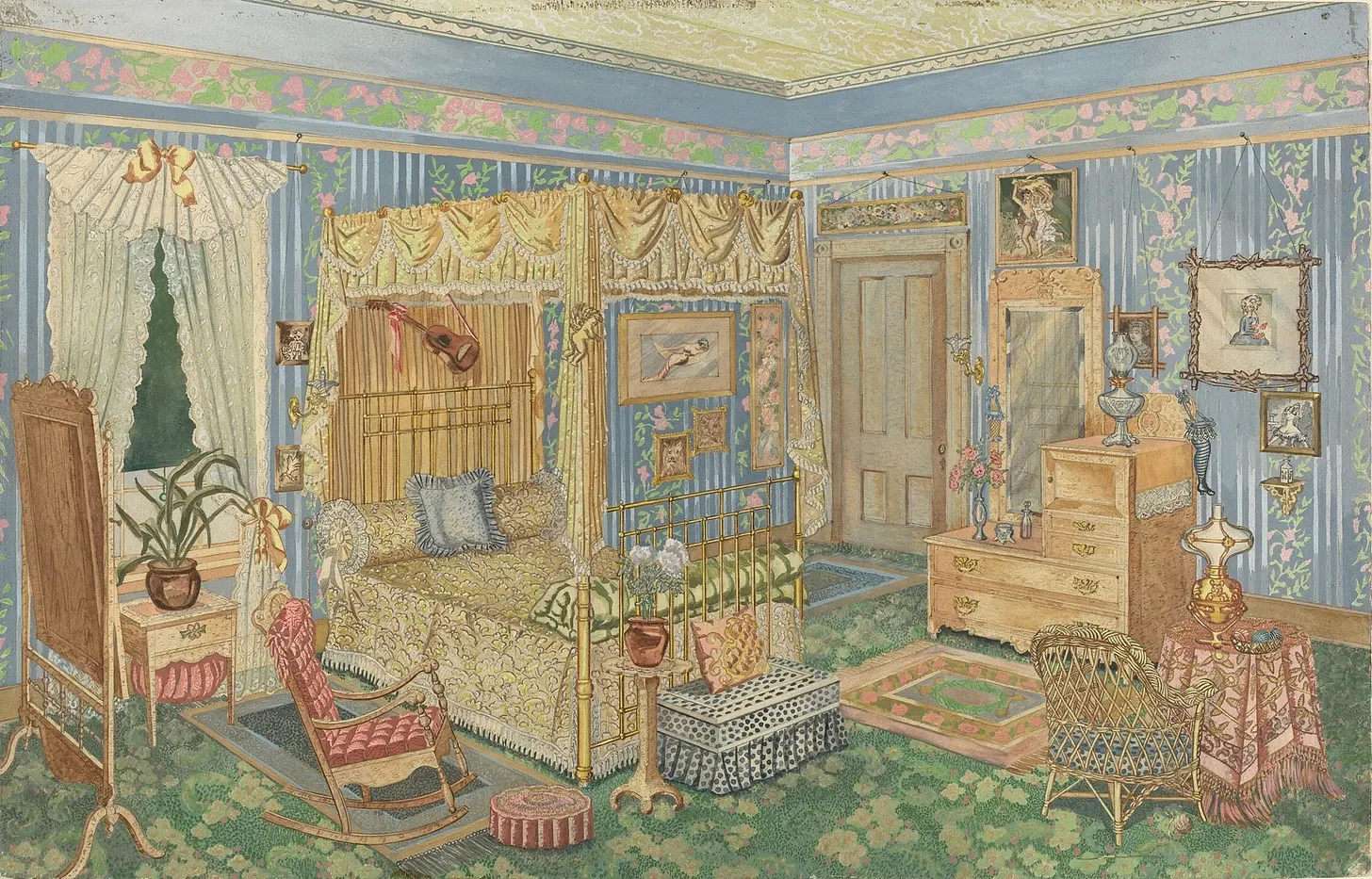
Woman’s Bedroom (1935-1942), Perkins Harnly (American, 1901-1986)
Meanwhile, on finding love itself, the actual hunting and not just preparing an extra nightstand for when your future lover comes, has become a tireless cycle of availability, evaluation, and quiet disappointment. For a generation that craves connections, sadly, we’re living in the conditions that make connections increasingly difficult. Dating apps promise endless choice while also quietly encouraging disposability. Work has become more about the grind and productivity, but leaves a little room for intimacy. On social media, we’re often told to be whole, healed, and fully self-sufficient before being chosen. The second nightstand is then starting to feel like proof of both stability and absence. It is a sign that we’re financially able to afford space and comfort. As time goes by, the second nightstand has collected dust, a glaring reminder of the absence, once loaded with hope, now carrying more dependency and blame for the fact that love has yet to arrive.
So how can we make room in our space, for a world that rarely slows down to let love arrive naturally? Interior objects often depict our habits, desires, and absences. Furniture, after all, has always adapted to how we live, even when it begins to absorb meanings and the weight of our expectations. We seem more prepared for love than ever - or at least prepared to find it. With one, two, or zero nightstands, are we prepared to receive love?
