Being Seen Without Being Known

There is the self who lives, and the self who can be watched living.
For a while, one of the stranger consequences of sharing parts of my home online was discovering how closely other people looked at it. It was rarely anything explicitly invasive. Often it was an innocent comment about an object in the background, a change in the room, or something that had appeared briefly in an earlier post. Still, there was something unnerving about having somebody point out a detail I had not consciously shown them. I would find myself thinking: I didn't know you were looking at that.
The discomfort was not really about the objects themselves. I had, after all, chosen to put a camera in my home and publish the result. What unsettled me was the discrepancy between what I thought I was showing and what somebody else was capable of seeing. I might have thought I was showing a table I had made, while someone else was looking at the books behind it, the arrangement of the room, the clothes I had left somewhere, the evidence of a life continuing beyond the ostensible subject of the image. The frame was mine, but attention was not.
This is one of the peculiar negotiations involved in making one's private surroundings visible. We tend to imagine privacy spatially: inside and outside, public and private, the street and the home. The home is supposed to be the place in which observation recedes. Yet a camera complicates that boundary without physically changing it. Nothing has been opened and nobody has entered, but the room has acquired spectators.
For some time, I assumed the logical response was greater control. A photograph could be cropped more carefully; a short video could reveal only one corner. The less material there was to inspect, the less vulnerable I would feel to being inspected. But recently I found myself moving in the opposite direction, making something in which much more of my home and myself remained visible for much longer than I was accustomed to. I expected the increased visibility to intensify the feeling of exposure. Instead, watching it produced an unexpected sense of detachment.
I recognized the person on the screen without quite experiencing her as myself. The same was true of the rooms around her. Everything was familiar, and yet the familiarity was peculiar. I knew those objects intimately, but on screen they appeared to belong to a composition rather than to my everyday life. I found myself looking at my own home with the mild curiosity with which I might look at somebody else's.
It made me wonder whether the fear of being watched had depended on a misunderstanding of what it means to be seen.
The Home and Its Image
The home I inhabit is not primarily a visual object. I know it through repetition and use: the distance between things, the routes I take through rooms without thinking, the light at particular times of day, the cupboard that does not close properly. There are associations attached to objects that cannot be inferred from their appearance. A chair might carry years of memory while remaining, to somebody looking at a photograph, simply a chair.
The camera strips much of this away while simultaneously making other things more visible. It creates edges. It produces foreground and background. Objects that have no particular relationship in lived experience suddenly seem to have been deliberately arranged because they occupy the same frame. Colors repeat. Sightlines emerge. An ordinary room acquires something resembling production design.
This is close to the distinction John Berger makes throughout Ways of Seeing: an image does not simply transport a thing intact from one place to another. The act of reproducing it changes the conditions under which it is seen. Context shifts, relationships appear, meanings become available that may not have existed in quite the same way before. Every image, as Berger argues, embodies a way of seeing.
This distinction between experiencing a place and seeing its representation seems obvious, but I had not understood how large the distance between the two could feel until the represented home was my own. What appeared on screen was accurate. Nothing had been staged into existence. Yet accuracy did not make it identical to the place I knew.
Once my home entered an image, it became available to a kind of looking that did not exist while I was simply living in it. The camera had not only shown the room; it had reorganized my relationship to it. And then there was the more uncomfortable consequence: it had also reorganized my relationship to myself.
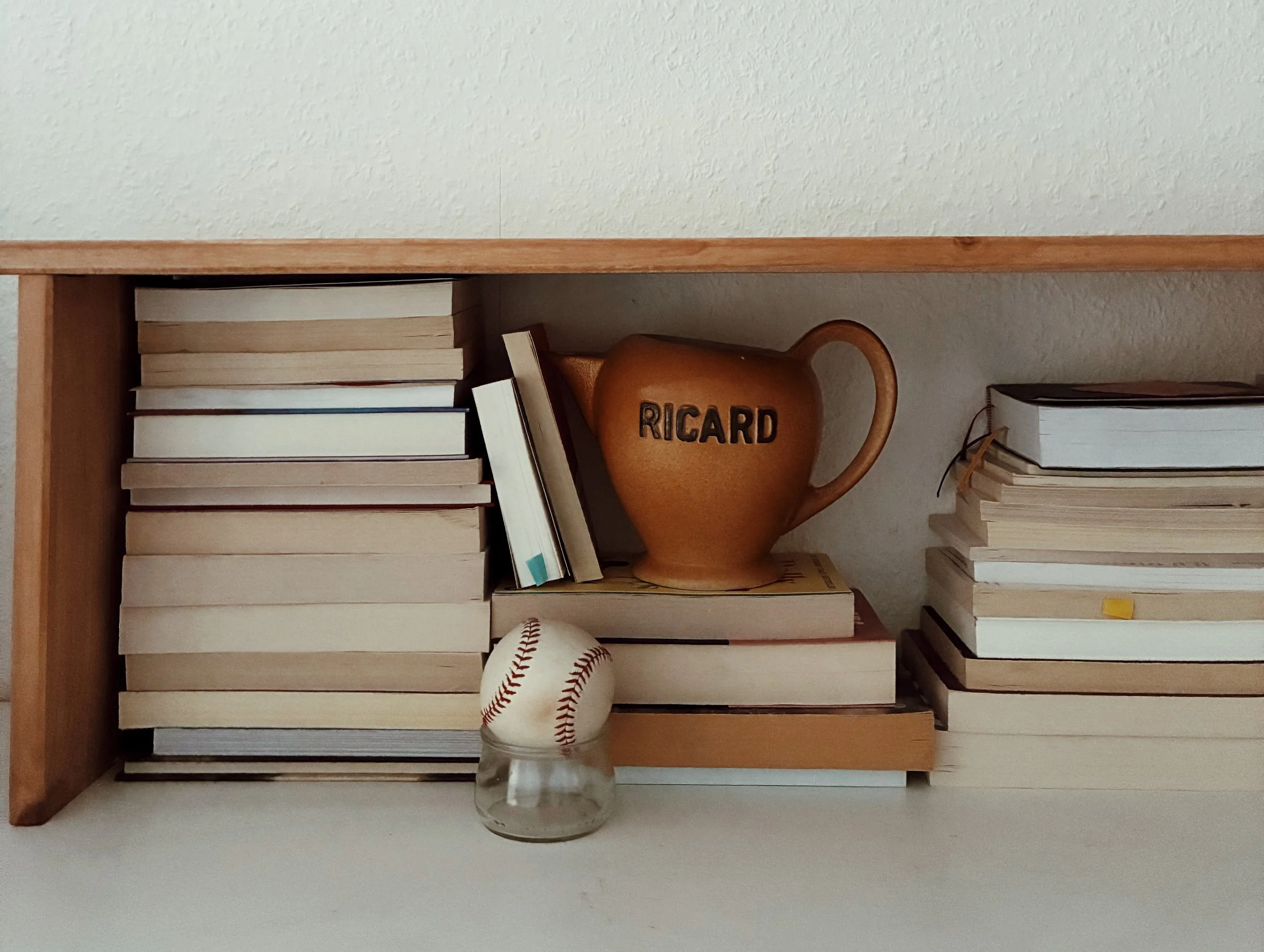
An image does not simply transport a thing intact from one place to another.
Seeing Yourself From the Outside
There is the self who lives, and the self who can be watched living. Once the second exists, it becomes possible to imagine the spectator even when no spectator is present.
Laura Mulvey's concept of the male gaze is concerned with a particular cinematic structure: the way classical Hollywood cinema positions women as objects of visual pleasure for an implicitly masculine spectator. The phrase has since escaped its original context and is now applied rather casually to almost any uncomfortable experience of being looked at. But there is something in Mulvey's distinction between acting and being made available to be looked at that feels relevant here. The camera can turn a subject into an image upon which somebody else's attention acts.
Berger describes a related condition when writing about women in European art: the awareness of being observed becomes internalized, so that one learns to survey oneself. Digital platforms have made that mechanism strangely literal. We inspect ourselves before others have the opportunity to do it. A photograph is examined not only for what we intended to show but for what might accidentally be revealed. We look behind ourselves. We zoom into corners. We anticipate interpretations. The imagined spectator arrives before the actual one.
This was what those seemingly harmless comments could activate in me. A stranger noticing an insignificant object could suddenly make me reconstruct my own room from their position. I was no longer looking outward from my home; I was looking back at it through somebody else's eyes.
The effect is a peculiar form of self-consciousness because it extends beyond the body. The conventional gaze concerns how one appears, but when the domestic environment becomes part of one's public image, the home itself begins to behave like an extension of the self. Taste becomes legible through furniture, books, appliances, mess, order, color, consumption. The room appears capable of saying things about you even when you have said nothing.
Perhaps that is why comments about a background object can occasionally feel more intimate than comments about appearance. The object was not performing. It was simply there.
But something unexpected happened as I became more accustomed to seeing these images. Repeated visibility began to produce distance rather than greater exposure.
The Person in the Image
Watching myself for an extended period did not intensify my identification with the image. It weakened it.
The person on screen was undeniably me, but she also possessed qualities that belonged only to the representation. Her movements had been selected by an edit. Time around her had been compressed. Certain gestures survived while thousands of others disappeared. Her surroundings had been converted into shots. Even without consciously performing a character, the simple acts of recording and editing had produced one.
There is something of Erving Goffman's theatrical understanding of everyday life in this. In The Presentation of Self in Everyday Life, social interaction is already a process of managing impressions, performing roles, and moving between “front” and “back” regions depending on who is present. Social media seems initially to collapse those regions. Bedrooms become backgrounds. Kitchens become sets. Activities once belonging to the backstage of ordinary life become content.
Yet the more I watched myself, the more I began to wonder whether the image actually creates another boundary altogether.
The private room may become publicly visible, but visibility does not necessarily turn it into the same place for the spectator that it is for the person who lives there. The screen produces a duplicate of sorts: a public room constructed from the appearance of a private one. Likewise, it produces a public person assembled from gestures, sentences, clothes, decisions, and fragments of time belonging to an actual person.
Recognizing this has been unexpectedly liberating. If I can watch the person on screen and experience her partially as a stranger, then somebody who has never met me must be encountering an even greater distance. They may see more of the image than I intended, but that does not necessarily mean they have seen more of me.
And the more images accumulate, the stranger this relationship becomes.
The Other Home
There is my home. Then there are photographs of my home, videos of my home, older photographs remembered by followers, repeated angles, recurring objects, and changes noticed over time. Eventually, the represented home develops a continuity of its own.
A person who has followed somebody's content for years might recognize a room immediately. They may notice when a lamp moves or when a table disappears. They might even possess a strangely comprehensive visual memory of that space. Yet their knowledge of it is fundamentally different from the knowledge of the person who lives there. Their version is assembled from representations.
This is where Baudrillard's ideas about simulation begin to feel less abstract than they initially sound. In Simulacra and Simulation, representations are not merely passive copies of an underlying reality. They circulate, accumulate meanings, and eventually begin to operate according to a logic of their own. The relationship between the representation and the supposed “original” becomes increasingly unstable.
Social media provides an almost comically convenient environment in which to recognize this. The online version of a room does not exist as a single photograph. It is produced cumulatively. Every post adds another angle, another object, another moment. Eventually, it has its own history.
In some ways, this represented home can become more coherent than the real one. Real homes are full of interruptions, temporary messes, smells, sounds, boring afternoons, and objects that disappear from attention through familiarity. The mediated home is composed of moments in which it was worth pointing a camera at something. Even when the content is casual, selection has already occurred.
The same is true of the represented self. The person visible online may accumulate a recognizable aesthetic, vocabulary, wardrobe, set of interests, and habits. Other people can form remarkably detailed impressions of her. Over time, this collection of signs begins to feel like a person because it possesses consistency and history.
And perhaps this is where my earlier anxiety had gone wrong. I had treated the accumulation of information as though it inevitably produced intimacy. The more somebody had seen, I assumed, the more access they had gained.
But a representation can be extraordinarily detailed without becoming the thing it represents.
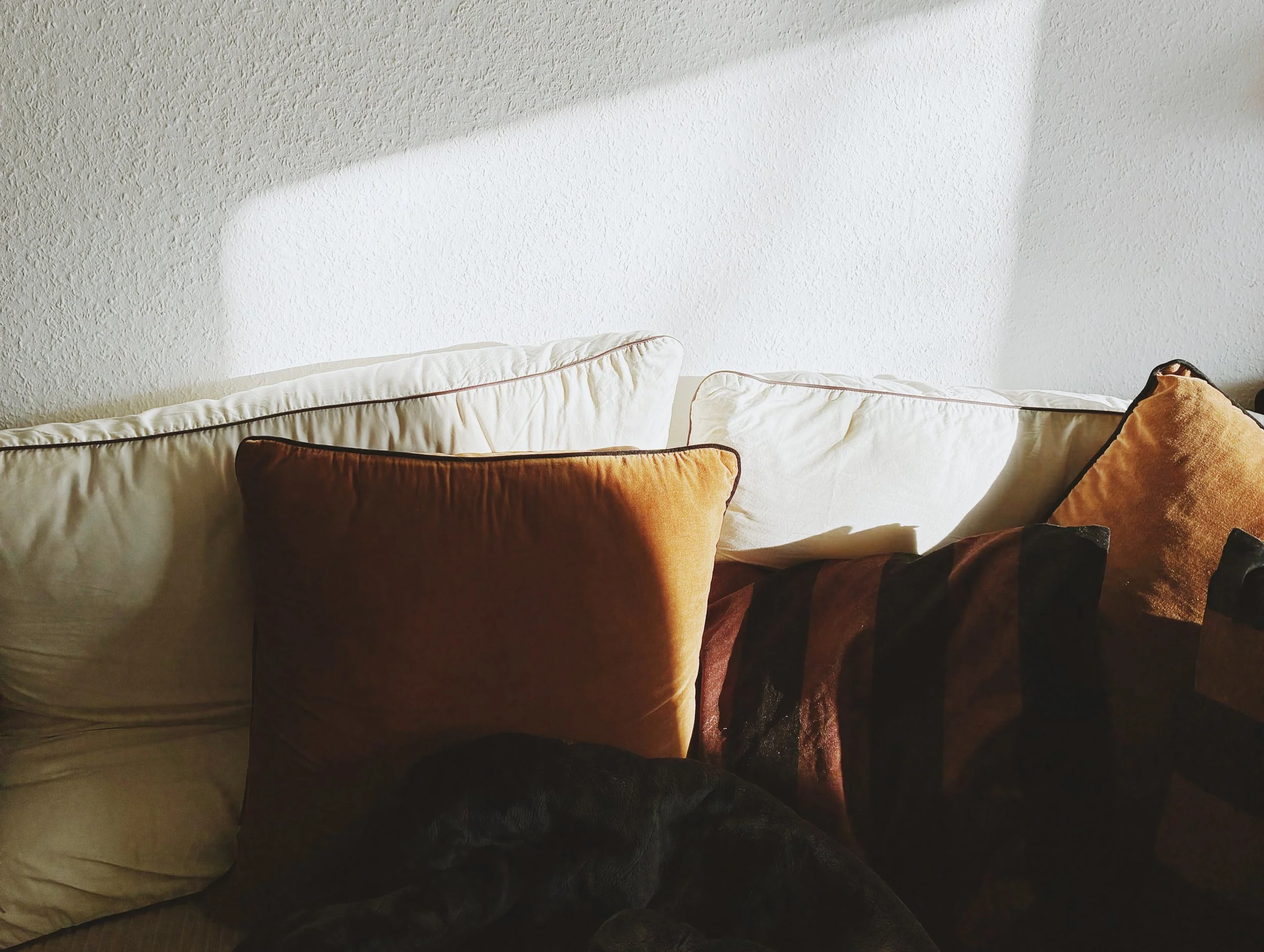
Eventually, the represented home develops a continuity of its own.
The Limits of Visibility
Someone could recognize every piece of furniture in my home and still have no idea what it feels like to live there. They could know the layout without knowing how I move through it. They could see the kitchen repeatedly without possessing any of the memories attached to it. They could know which chair I sit in without knowing what I think about while sitting there.
The image can contain an extraordinary amount of information while excluding almost all experience.
This may be one reason parasocial familiarity can feel so convincing. Repetition resembles intimacy. Seeing the same room, face, or gestures over months and years produces recognition, and recognition is easily mistaken for knowledge. Yet what becomes familiar is not necessarily the person or place itself. What becomes familiar is its mediated continuity.
There is, admittedly, something uncanny about this. A stranger might remember an earlier version of my room better than I do. Someone may notice a change that I stopped noticing weeks ago. The represented version of a life can be archived, replayed, and scrutinized in ways lived experience cannot.
Baudrillard might take this somewhere more unsettling: at a certain point, the represented version does not simply document reality but begins to compete with it. The home that exists online can become more recognizable, more stable, and perhaps even more “real” to its audience than the messy and continuously changing place from which those images originate.
But from the other side of the screen, I have found something strangely reassuring in that separation. The spectator can look closely. They can pause. They can notice the object behind the object I meant to show. They can form opinions and associations I never anticipated. I cannot control where their attention goes once the image leaves my hands. Yet all of this activity still takes place on the other side of a representation.
What I can recognize now is that looking closely is not the same as getting inside.
I used to think that protecting privacy online meant carefully controlling visibility. If people could see less, there would be less to interpret, and therefore less of me would be exposed. But this assumes that visibility and intimacy increase together: that the more somebody sees, the closer they get to the person behind the image.
I no longer think the relationship is so straightforward. Perhaps privacy does not have to mean remaining unseen. There is another kind of privacy contained in the distance between appearance and experience, between recognizing somebody and knowing them, between seeing a room and inhabiting it.
The person I encounter on screen has begun to make that distance visible to me. I recognize her face, her voice, and her surroundings, but I can also see the strange autonomy the image has acquired. She belongs partly to me and partly to the medium that produced her. Other people are free to interpret that version because interpretation is what images invite.
Meanwhile, the life from which those images were taken continues outside the frame. My home can become familiar to someone who has never entered it. It can be watched, remembered, analyzed, and perhaps even imagined in considerable detail. But the home that appears on a screen and the home I experience are not quite the same place.
There is something comforting in that distinction. I had been afraid that making myself more visible would gradually erase the boundary between what was public and what remained mine. Instead, visibility has made me more conscious of a boundary I had overlooked: the distance between an image and a life.
Being seen, I am beginning to realize, is not the same thing as being known.
Further Reading
If you’re interested in the ideas behind this essay, these are some of the books and essays that shaped how I’ve been thinking about images, spectatorship, identity, and the strange experience of living alongside representations of ourselves.
John Berger, Ways of Seeing
Probably the best place to start. Berger writes about how images change depending on who is looking, how they are reproduced, and the cultural structures that shape the act of seeing. It’s short, accessible, and one of those books that permanently changes how you look at images.
Jean Baudrillard, Simulacra and Simulation
A much denser read, but particularly interesting in the context of social media. Baudrillard’s ideas about copies, signs, and simulations offer a strange way of thinking about the online versions of our homes—and ourselves—that gradually develop lives of their own.
Erving Goffman, The Presentation of Self in Everyday Life
Written decades before social media, but remarkably relevant to it. Goffman looks at everyday social interaction as a form of performance and explores how we present different versions of ourselves depending on who is watching.
Laura Mulvey, “Visual Pleasure and Narrative Cinema”
Mulvey’s hugely influential essay introduced the concept now commonly called the “male gaze.” Its original argument is specifically about narrative cinema, gender, and spectatorship, but it also offers a useful starting point for thinking about what happens when a person becomes an image intended to be looked at.
