A quiet woodworking project inspired by Japanese shoji screens, simple wooden structures, and soft, diffused light.
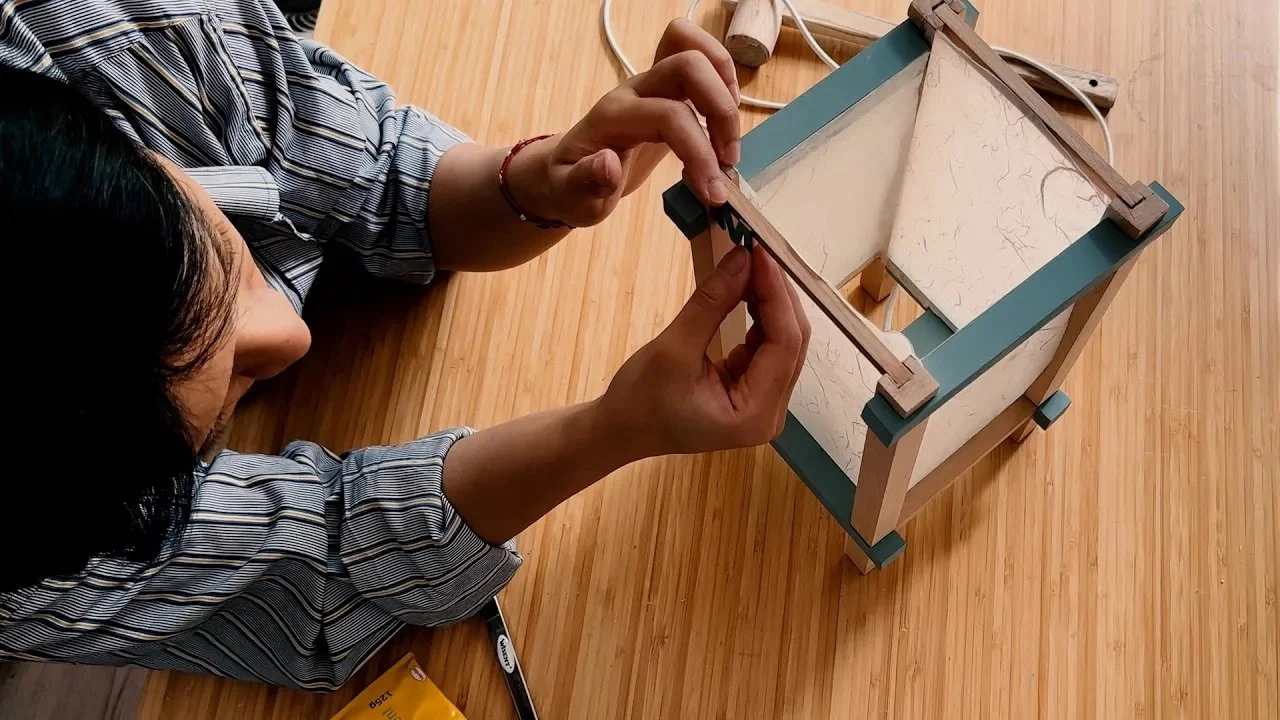
I've always loved the way lighting can change the atmosphere of a room. Not necessarily through an elaborate fixture or an expensive designer lamp, but sometimes through something as simple as a wooden frame and a soft, diffused glow.
For this project, I wanted to make a lamp for my best friend. Something simple, warm, and handmade. I eventually landed on a design inspired by Japanese shoji screens, with their delicate wooden structures and translucent surfaces.
It was also a good excuse to spend some time woodworking.
Inspired by Japanese Shoji Screens
Traditional Japanese shoji screens are typically made with wooden lattice frames and translucent paper. They're often used as sliding doors, partitions, or window coverings, allowing natural light to pass through while creating a sense of privacy. What I find particularly beautiful about shoji is the relationship between structure and light. The wooden framework is visible, but it doesn't dominate. Instead, it becomes part of the composition, creating a balance between solid materials and the light passing through them.
I wanted to explore a similar idea on a smaller scale, using a simple wooden structure to create a lamp that would give off a gentle, ambient glow. My design isn't a traditional Japanese shoji lamp, but rather a small woodworking project inspired by those principles.
Building the Wooden Frame
I started with the wooden structure, measuring and cutting the individual pieces before assembling them into the lamp frame. I enjoy working with wood because even a relatively simple design requires a surprising amount of attention. Measuring, cutting, checking the fit, and making small adjustments are all part of the process.
And, of course, things don't always go according to plan. There were a few moments when the pieces didn't quite cooperate, but that's also part of what I enjoy about making things myself. You learn to work with the material rather than expecting everything to turn out perfectly on the first attempt. For a project like this, the wooden frame is particularly important. Since the design is relatively minimal, the proportions, alignment, and small details become much more noticeable.
Creating Soft, Diffused Light
One of the things I wanted to achieve was a softer quality of light. Rather than leaving the light source completely exposed, the idea was to use translucent material to diffuse it through the wooden structure. This is what initially attracted me to shoji-inspired lighting. The combination of wood and a light-diffusing surface creates something that feels both architectural and cozy. I also like how the lamp can function as a decorative object even when it isn't switched on. The frame itself has a graphic quality, while the illumination changes its appearance entirely. For me, good lighting isn't necessarily about making a room brighter. Sometimes it's about creating a particular atmosphere.
A Handmade Gift
I think there's something particularly nice about making an object for someone else. When you're building something for your own apartment, you're usually thinking about practical requirements: dimensions, storage, budget, and how everything fits into the space. Making something as a gift is a little different. You're thinking about the person who will receive it and whether the object will find a place in their everyday life. This lamp was never meant to be a perfect piece of furniture or a demonstration of advanced woodworking. It was simply something I wanted to make for my best friend. And I think that's enough of a reason to start a project.
Watch the Quiet Woodworking Process
I also filmed the process of making this shoji-inspired wooden lamp. Unlike a conventional woodworking tutorial, the video doesn't have narration or background music. It's just the sounds of measuring, cutting, assembling, and working with the materials. I wanted to document the process as it happened, including the little mistakes and adjustments along the way.
Tools & Materials for a DIY Wooden Lamp
If you're interested in making a similar Japanese-inspired lamp, here are a few tools and materials worth exploring.
Japanese pull saw — Useful for making controlled, precise cuts in smaller wooden pieces.
Woodworking clamps — Helpful for holding pieces in position during assembly.
Measuring square — For checking angles and keeping the wooden frame aligned.
Lamp paper or light-diffusing material — To soften the light passing through the frame.
LED lighting components — Choose a suitable low-heat, certified lighting solution designed for enclosed or decorative lamps.
Some of the links in this article are affiliate links. If you purchase through them, I may earn a small commission at no additional cost to you. As an Amazon Associate I earn from qualifying purchases.
More Things to Make
This lamp is one of several woodworking and DIY projects I've been working on for my home and the people around me. I enjoy making furniture and everyday objects, especially things that combine practical needs with a little experimentation in design. If you enjoyed this project, you might also like my DIY coffee table with folding legs or my ongoing kitchen renovation, where I've been experimenting with wood joinery, building my own kitchen components, and figuring things out along the way.
You can also follow the projects on my YouTube channel, where I share woodworking, interior design, and little stories from home.
Thanks for reading ♡
